Friday, October 3, 2008

Trig/Pre-Calc on Moodle


Here is a link to our course page on Moodle. This page contains a weekly schedule, with homework assignments, useful links, notes, handouts, etc. You should get a free Moodle account as most teachers in the school only allow access from registered users to their courses. If you just wanna browse the page then you can log in as a guest. No matter what, you need to know the enrollment key. If you don't know the enrollment key, then pay attention next time in class.

Wednesday, October 1, 2008

Long Division of Polynomials Help

Text and video:
http://www.mathsisfun.com/algebra/polynomials-division-long.html

Youtube video with an especially helpful example #2 at 3:45 into the video:
http://www.youtube.com/watch?v=l6_ghhd7kwQ

If you have a "dial-up" connection here is a text page, check out the second example:
http://www.wtamu.edu/academic/anns/mps/math/mathlab/col_algebra/col_alg_tut36_longdiv.htm

Good Luck!

Tuesday, September 23, 2008

Our Wikihow is Up and Running!

You must contribute 2 significant edits to our article titled "How to solve polynomials of a higher degree". One edit will help start the article, another to help refine our article or a related wikihow article.

First edit due by Monday 9/29

Second edit after 9/29 is due by Monday 10/6

You must review the Wikihow Writer's Guide before editing

AND

You can learn about using Wiki Syntax (used in almost every wiki) to try some advanced editing techniques.

Monday, September 22, 2008

Wikihow Account

For this assignment you must contibute to the creation of our very own wikihow entry. Here are the first steps to completing this assignment.

1. Go to wikihow.com and create an account for free.
2. After you have created an account make sure you are logged on
3. Answer the following "would you rather" by leaving me a message on this page http://www.wikihow.com/User_talk:MrBoettcher
4. Would you rather get an "A" on your math quiz or get five extra hours of sleep?

Thursday, September 18, 2008

QUIZ ALERT: Solving Polynomials 9/25

I sent an e-mail announcing a quiz on Sept. 25th. If you would like to sign up for that e-mail list send me an e-mail and I will add you to the list. The topics for this quiz are from our studies this year of sections 2.1-2.5 in the book.

Thursday, September 11, 2008

QUIZ ALERT: Tues. 9/16

Piecing it all together: Quadratics

  • Critical features of a parabola
  • Finding vertex (x=-(b/2a) or completing the square)
  • Finding x-intercepts/zeros (factoring or solving for zero)
  • Finding y-intercepts (when x=0)

Don't forget to check your vocab lists for of section 2.1

Wednesday, September 10, 2008

Stroke of Insight

Parabola Games


You can play the real game we simulated in class by downloading the old-school DOS program Scorched Earth. Have fun.

Monday, September 8, 2008

TI Emulator

I found a TI emulator so you may use a TI-83 or 84 calculator on your home computer. There is one minor problem, which is that if you do not own a TI graphing calculator you cannot use the emulator since it requires a ROM image from your calculator which requires you to hook your own TI to your computer (see, getting a ROM image for help). However, if you would like to use your calculator on your home computer at anytime you can download any of the free programs from ticalc.org, then get the ROM image from your calculator by following the instructions on this site. Good luck!

Friday, May 16, 2008

When you turn in your project, do not forget:
  • Your bibliography
  • Three questions about your topics main ideas that students should be able to answer.

When you turn in your project you must give me a digital copy of the file.
  1. Find your file and rename it so your name is in the title.
  2. Right-click (or control-click) your file.
  3. Select "duplicate" from the menu.
  4. Open the "Student Work" Folder and find the "Boettcher" folder.
  5. Open the folder and drag and drop your duplicate into the "Drop Box" folder.
  6. Select "OK."
You must give me a printout of your completed PowerPoint.
  1. In PowerPoint, go to the file menu and select print.
  2. Where it says "Print What," select "Handouts (6 slides per page)."
  3. Where it says "Output," select "Black and White."
  4. Select a printer that you know is working and print.

You must give me a printout of your Newspaper.
  1. If your document uses regular size paper
  2. Print the document to any printer that you know is working.
  3. If your document uses legal paper (3 inches longer)
  4. See Mr. Boettcher to load the proper paper so you can print your document.
If you do not have a printer at home, you can print out your project on Monday and give it to me by 4 pm.

Tuesday, May 13, 2008

Physics Phynal Exam Review

To complete your checklist you may need to complete some notes on-line. All of the PowerPoint notes and practice problems are available at my wikispaces website.

Finish your checklist by opening the files available on boettcher.wikispaces.com

Tuesday, May 6, 2008

Attention to those students who have Einstein’s Theories Topic #1 (General Relativity). I have changed the wording for the first three statements. The ideas are still the same so you do not need to research again, this is just to help clarify what is meant by the first three main ideas for your topic.

1. Describe the how gravity changes the space around a large mass.
2. Discuss the difficulty of visualizing curved space-time and the fourth dimension.
3. Discuss the similar effects for objects experiencing gravity and objects undergoing acceleration.

Friday, May 2, 2008

Keeping your Research Notes

Today you will make a file titled "Modern Physics Research" as a place to keep your notes and websites.

1. Go to the "Finder"
2. Go to "Applications" and open the "TextEdit" program
3. Save the TextEdit file as "Modern Physics Research" and save it to you desktop.
4. Find your topic and five main ideas on this blog post and copy and paste it into your TextEdit file.
5. For each main idea (1-5) list the websites and any notes that are important to each idea.

Like This:

Don't Forget:

1. Use four different, reliable resources
a. Cite all sources using proper MLA citation format (use bibme.org)
2. Profile at least one scientist who played a role in a discovery related to this topic


Research Topics:


Nuclear Physics Topic #1
1. Explain the steps of a fission reaction.
2. Describe and compare the products of a fission reaction (What is emitted? What substances are produced?)
3. Give two examples of fission reactions, including the reactants (what goes in) and the products (what comes out.) Be sure to note light and heavy elements.
4. Explain how fission reactions are useful for the generation of power. Include benefits and concerns related to nuclear power plants.
5. Explain how fission reactions have been used for political and military purposes (nuclear weapons and nuclear powered submarines.)


Nuclear Physics Topic #2
1. Explain the steps of a fusion reaction.
2. Describe and compare the products of a fusion reaction (What is emitted? What substances are produced?)
3. Give two examples of fusion reactions, including the reactants (what goes in) and the products (what comes out.) Be sure to note light and heavy elements.
4. Discuss naturally occurring fusion reactions in stars.
5. Explain the possible benefits of harnessing fusion reactions to generate power, and discuss the obstacles that have prevented the use of fusion reactions to generate power.


Nuclear Physics Topic #3
1. Explain why some substances undergo nuclear (or radioactive) decay.
2. Discuss the products of nuclear decay (what is emitted by radioactive materials?).
3. Discuss some dangers associated with nuclear decay.
4. Explain how radioactive materials can be useful in medicine and/or industry.
5. Give at least three important uses for radioactive materials.


Einstein’s Physics Topic #1
1. Describe the gravitational field surrounding a large mass.
2. Discuss the difficulty of visualizing curved space-time (extra dimensions).
3. Explain why a uniform gravitational field is equivalent to a uniform acceleration.
4. Detail an experiment that verified Einstein's theory of General Relativity.
5. Describe how black holes and the big bang theory followed from General Relativity.


Einstein’s Physics Topic #2
1. Describe how time may be measured differently for two observers watching a "light clock" when one person is moving near the speed of light relative to someone else.
2. Explain the "twin paradox."
3. Discuss why objects can never travel faster than the speed of light (what happens to matter as more energy is added at very fast speeds?).
4. Explain how E=mc2 describes the tremendous amount of energy stored in small particles of matter.
5. Describe the relativistic effects for a muon as it makes its trip through the earth's atmosphere (what happens to an object moving near the speed of light).


Quantum Physics Topic #1
1. Describe the problems that led Heisenberg to create the uncertainty principle.
2. Express the uncertainty principle in one simple statement.
3. Describe the relationship of Planck’s constant to the uncertainty principle.
4. Explain why any time you measure a property of something you have to alter it.
5. Discuss how uncertainty has changed classical (Newtonian) physics to show that the universe is unpredictable.


Quantum Physics Topic #2
1. Explain why light should be considered a wave and a particle.
2. Discu ss the importance of the double-slit experiment in proving wave behavior.
3. Detail an experiment that proved De Broglie's hypothesis.
4. Describe how De Broglie changed the model of an atom.
5. Demonstrate how De Broglie's hypothesis can determine the wavelength of any object.

Monday, April 28, 2008

TEST ALERT - This Thursday 05/01/08

This Thursday an assessment (test) will be given on the topic of light waves. The topics to be included are:
  • Light emission by atoms ("How Light is Made in Atoms" answers)
  • Refraction of light (page 504)
  • Solving for frequency and wavelength using the wave equation (page 525)
  • Why certain objects reflect certain colors (page 535)
  • The different types of electromagnetic waves (page 526-527)
Notice the pages are given so you may study these topics tonight. We also had many discussions/notes about these topics that you should review to prepare for the test. A tutorial session will occur Wednesday after school to review and prepare for the test at 3:35.

Monday, April 14, 2008

TEST ALERT - This Thursday 04/17/08

This Thursday we will have a test about Mechanical Waves in Physics. To prepare for this test you have been given a study guide. Completing this study guide will help you review the ideas. To prepare for this test further I recommend that you read and reread the following pages in your blue physics textbook:

In Chapter 20, pages 434-447
In Chapter 20, pages 456, 457, 459-460, and 469

To be extra prepared, the chapter review on pages 450-452 will be helpful.

Wednesday, April 2, 2008

ALERT - Test Thursday

We will be having a re-assessment related to speed calculations and experimental design Thursday, April 3rd. We have recently reviewed speed calculations involving wave speed and have been discussing lab variables at different times throughout the year. Since every science class requires an understanding of experimental desig, students are being re-assessed to be assured that they have retained these understandings. Students received a review packet to prepare them for this assessment on Tuesday and should complete those questions to be ready for the re-assessment.

Tuesday, March 25, 2008

Slow Motion Videos

Today in class we observed water waves in a wave tray. We saw plane waves, circular waves, and wave diffraction. We also watched a slow-motion video of a drop of milk making waves in a saucer. The link for the video is given below and shows that as the wave propagates through the milk, the original drop stays in one place. This proves that particles in a medium stay in one localized area while the wave travels through the medium.

Milk Drop:

Slow motion video of a drop of milk


Find a large collection of slow motion videos here:
Interesting High-speed Video

Wednesday, March 19, 2008

Wave Interference

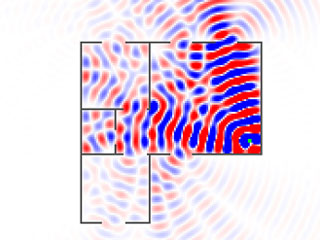
Here are two great interactive web pages that show the behavior of waves when they combine. It may not sound interesting, but the combinations you can create are endless. Try creating some patterns in this first one from MIT:

Radiation in Two Dimensions (by "radiation" they mean waves)


Experiment with the effects of "loose ends" and "fixed ends" on this one from the University of Colorado:

String Wave Demo

Thursday, February 28, 2008

Computer Lab 02/28/08

1. Sign-up for e-mail updates by entering your e-mail or your parent's e-mail address in the box to the right. Follow the instructions given and then return to the blog.

2. Fill in the blanks on the worksheet by going to the Physics Classroom website's Power page.

3. Check your answers to the blanks with Mr. Boettcher.

4. a. If you went on the field trip with Mr. Billingsley:
You need to collect some data in the hallway. Go with a partner to collect two times for walking up the stairs and two times for "walking fast" up the stairs. When you come back with data you may finish your calculations.

4. b. If you DID NOT go on the field trip with Mr. Billingsley:
You must answer the Check for Understanding questions on the worksheet.

5. EVERYONE: for homework tonight you have to read pages 89 & 90 in your blue Physics text and respond to the following prompt. Complete this on the back of your worksheet from today:

You are a fitness trainer and one of you clients wonders why it matters how fast he lifts weights. He says, "you want me to start by lifting a barbell in 10 seconds, and then 9 seconds, then 8 seconds, etc. until I do it in 1 second. Why can't I just lift it at my own pace?" Explain to him why it matters how fast he lifts the weights? Use the words work, joules, seconds, power, watts, and horsepower. Write at least four sentences.

6. If you have time, try this lab. You will need someone to measure how far you move when you do a push-up, but you can easily compare to see who is more powerful.

Thursday, February 7, 2008

Monday, February 4, 2008

Voltage and Current Homework

Here are a couple of leads for Internet research about voltage and current.

The Physics Classroom - remember that "electric potential" is the same as voltage.


Voltage explained


Google search of "current electricity"

Good luck

Friday, February 1, 2008

Weekly update Feb. 11-14

Next week we will continue our lessons with electric circuits. Students saw today that adding resistors in parallel will decrease resistance. We will examine the implications of this discovery and what it means for electricity in our home (it means too many items in one plug is dangerous, among other things).

It is a shortened week and I will be absent on Tuesday, the 12th. That means we will play some catch up this week as we prepare for the end of our electricity unit during the week of Feb. 19-22. Progress reports are to be given out on Thursday the 14th as students and teachers are off on the 15th.

NOTICE: A quiz retake will be given after school on Monday for the Motors/Generators quiz. Check your grade on the parent portal and study if you want to retake the quiz for a better grade.

Wednesday, January 30, 2008

QUIZ ALERT

We will be having a quiz on Friday, Feb. 1st about Motors and Generators. This will be a quiz based on the four essential questions from the unit outline Part A. E-mail me with questions.

Weekly Update Jan. 28 - Feb. 1

This week we have been working with electric circuits. Our first topic is voltage, and we will work with circuit boards and multimeters. Voltage can be a tricky concept so here is a website (Electrical Energy and Electric Potential) that can help clear up some confusion students may be having.

Sorry this update is late, I typically post the weekly updates on the previous Friday. If you would like to get these updates automatically sent to your e-mail inbox go to FeedBlitz.com and type in "boettchersuniverse.blogspot.com" in the box at the bottom of the site.

Friday, January 18, 2008

Weekly Update Jan. 22nd - 25th

During this short week we will review the concepts of electrical motors and generators in anticipation of the RAFT project due on Friday. On Tuesday students should have a rough draft ready for me to review in class. Everyday this week students will have opportunities to work with motors and generators first hand so that they may observe the phenomena.

If the students need further resources to research how the motors and generators convert energy they can find them on-line or in their book. I would recommend searching Google using quotes around the search terms, "electric motor" and "electric generator". I've also found that taking off the quotes will work well. The site www.howstuffworks.com can also be a good resource.

E-mail me with any questions. I'll try to keep an eye on my in-box seeing as I will not be needing to do anymore Master's homework. Enjoy your long weekend.

Tuesday, January 15, 2008

Electric Motor

On Wednesday and Thursday this week we will be making model electric motors in class. This instructional video will be shown in class and the video can be found on teachertube.com.

Here is a video of the demo I made yesterday after school.

Friday, January 11, 2008

Weekly Update Jan. 14th - 18th

This week we will be learning about magnetic materials and magnetic fields. This will help us understand how the majority of power plants convert mechanical energy to electrical energy, and vice versa. To observe this we will make a miniature electric motor (see video) and generate our own electricity with an electric generator.

The RAFT project will be the first major assessment for this semester and will happen this week! Look at the unit outline for more information.

JN - click here to go to the website I mentioned. The "purpose" is to understand what motivated Marie Curie to devote her life to science and understand what she believes.

Sunday, January 6, 2008

Electricity and Magnetism - Part A


Welcome back. I hope you all enjoyed the holidays and the nice break. My family had many adventures during our trip to Michigan and back. The weather was nice to us as the roads were kept clear, and it also provided snow for snowshoeing. My son Sydney enjoyed the snow for the first time, and my wife, Michelle, and I enjoyed time with our friends and family. Sydney also saw his first hockey game (see picture above) as we watched his older cousin play in the annual holiday high school tournament.


This week the class will begin our study of electricity and magnetism. As described in Unit Outline Part A, this week and next will focus on the connections among electric charge, magnetism, and electricity.


Students will have homework most nights that will include working with their textbook. Our first vocabulary quiz will also happen this week. I'm excited to be back to school, and I hope we are all rested and ready to start a new semester. Don't forget to e-mail me with any questions or concerns.